
Why Did Gold Suddenly Surge on August 19, 2026? The Key Reasons Behind the Sharp Rally
Why Did Gold Suddenly Surge on August 19, 2026? The Key Reasons Behind the Sharp Rally
 Badusha MohdAug 20, 2026 · 5 min read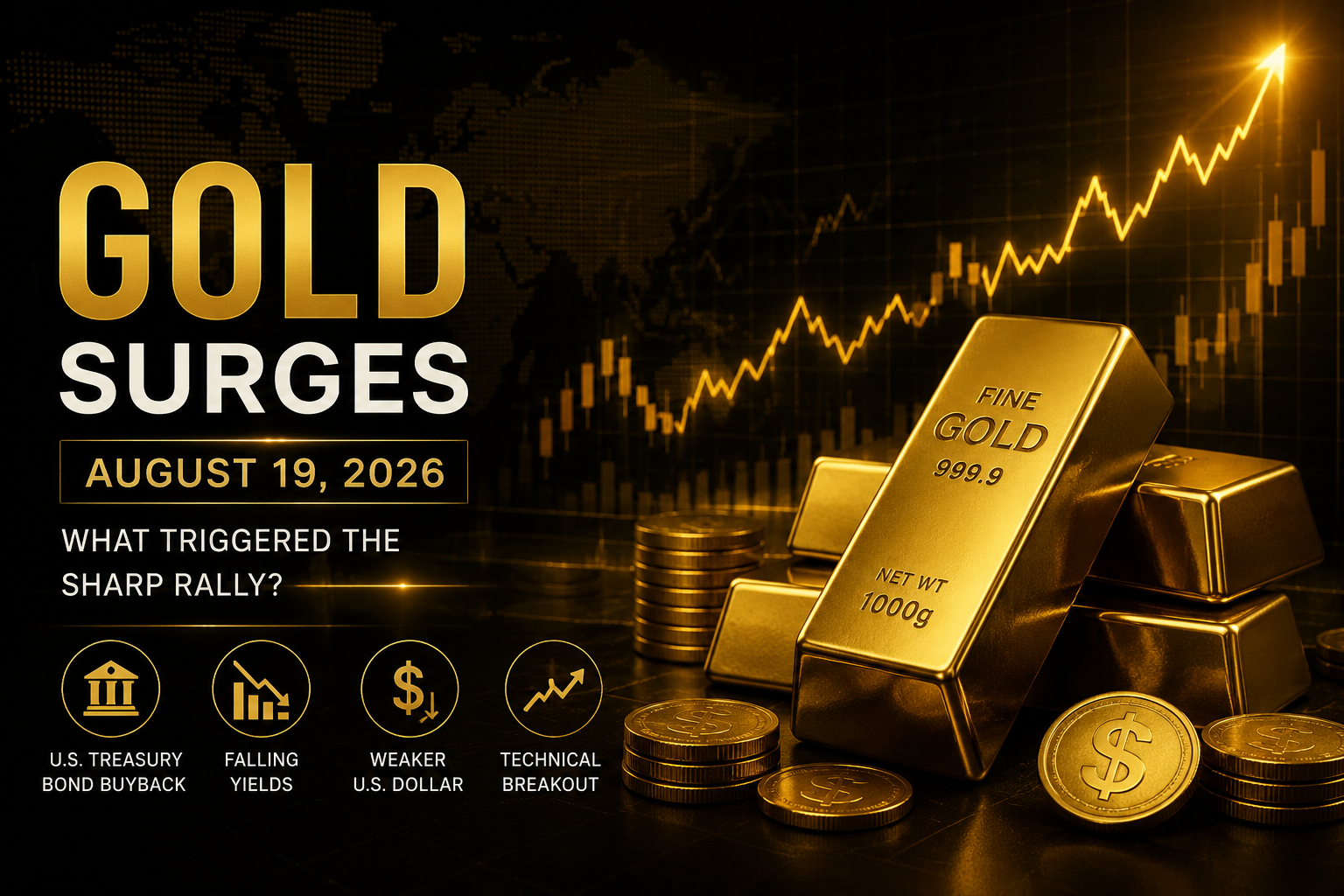
The rally was not driven by a single factor. Instead, several important market developments came together at the same time — particularly U.S. Treasury bond-buyback plans, falling Treasury yields, a weaker U.S. dollar, changing interest-rate expectations, and a technical breakout in gold prices.
1. U.S. Treasury Bond Buybacks Triggered a Major Market Reaction
One of the most important catalysts behind Wednesday’s gold rally was the U.S. Treasury’s announcement regarding its debt buyback operations.
The Treasury announced plans to increase the size of its buyback operations, with individual operations expected to involve at least $4 billion.
The move was viewed by markets as an effort to improve liquidity in the Treasury market and ease some of the pressure that had been building in longer-term government bonds.
Following the announcement, U.S. Treasury yields moved sharply lower.
That immediately became positive for gold.
2. Falling Treasury Yields Made Gold More Attractive
Gold does not pay interest or a fixed yield.
Therefore, when Treasury yields rise, investors have a stronger incentive to hold interest-bearing assets instead of gold.
The opposite happens when yields decline.
On August 19, long-term U.S. Treasury yields fell by roughly 10 basis points following the Treasury announcement, according to Reuters.
That reduced the opportunity cost of holding gold and helped trigger fresh buying.
The market relationship was essentially:
Treasury buybacks → Treasury yields fall → Opportunity cost of holding gold decreases → Gold demand increases
3. A Weaker U.S. Dollar Added More Fuel to the Rally
The U.S. dollar is another major driver of gold prices.
Because international gold is primarily priced in U.S. dollars, a weaker dollar generally makes gold cheaper for buyers holding other currencies.
On August 19, the U.S. Dollar Index fell by approximately 0.8%.
The combination of a weaker dollar and falling Treasury yields created a particularly supportive environment for precious metals.
In simple terms:
Dollar ↓ + Bond yields ↓ = Stronger support for Gold
4. Federal Reserve Expectations Remained in Focus
Markets were also closely watching the minutes from the Federal Reserve’s July meeting.
The minutes showed that concerns about inflation had increased among policymakers, while some officials had considered the possibility of higher interest rates.
Normally, expectations for higher interest rates can be negative for gold because higher rates increase the attractiveness of yield-bearing assets.
However, the market’s immediate reaction was dominated by what was happening in the Treasury market.
As Treasury yields fell following the buyback announcement, investors returned to gold despite the uncertainty surrounding future Federal Reserve policy.
This highlights an important point:
Gold was not reacting to the Fed minutes alone. The Treasury market’s sharp move was a major part of the immediate rally.
5. Technical Breakout Accelerated the Move
Fundamental factors were supported by an important technical development.
Gold moved above its 100-day moving average, creating a technical breakout.
Once a major technical resistance level is broken, momentum traders and algorithmic trading systems can generate additional buying pressure.
Short sellers may also close their positions, adding further upward momentum.
This can turn an initial fundamental rally into a much faster price move.
6. The Rally Extended Across Precious Metals
The strength was not limited to gold.
Other precious metals also recorded significant gains on August 19.
According to Reuters:
* Silver rose by around 4% * Platinum gained approximately 5.1% * Palladium climbed around 2.7%
The broad-based strength suggests that the move reflected stronger demand across the precious-metals complex rather than an isolated move in gold alone.
7. Does This Mean Gold Will Continue Rising?
Not necessarily.
The August 19 rally was extremely strong, but traders should avoid assuming that gold will continue moving higher in a straight line.
Gold remains highly sensitive to:
* U.S. Treasury yields * Federal Reserve policy expectations * U.S. inflation data * The U.S. dollar * Geopolitical developments * Global economic conditions * Investor positioning
In fact, gold had experienced significant pressure just one day earlier as Treasury yields moved higher.
The subsequent reversal demonstrates just how quickly gold can respond when the bond market and currency market change direction.
The Bottom Line
The sharp rise in gold on August 19, 2026 was the result of several bullish factors coming together:
1. U.S. Treasury bond-buyback plans 2. A sharp decline in Treasury yields 3. Weakness in the U.S. dollar 4. Changing expectations around interest rates 5. A technical breakout above the 100-day moving average 6. Strong momentum and buying across precious metals
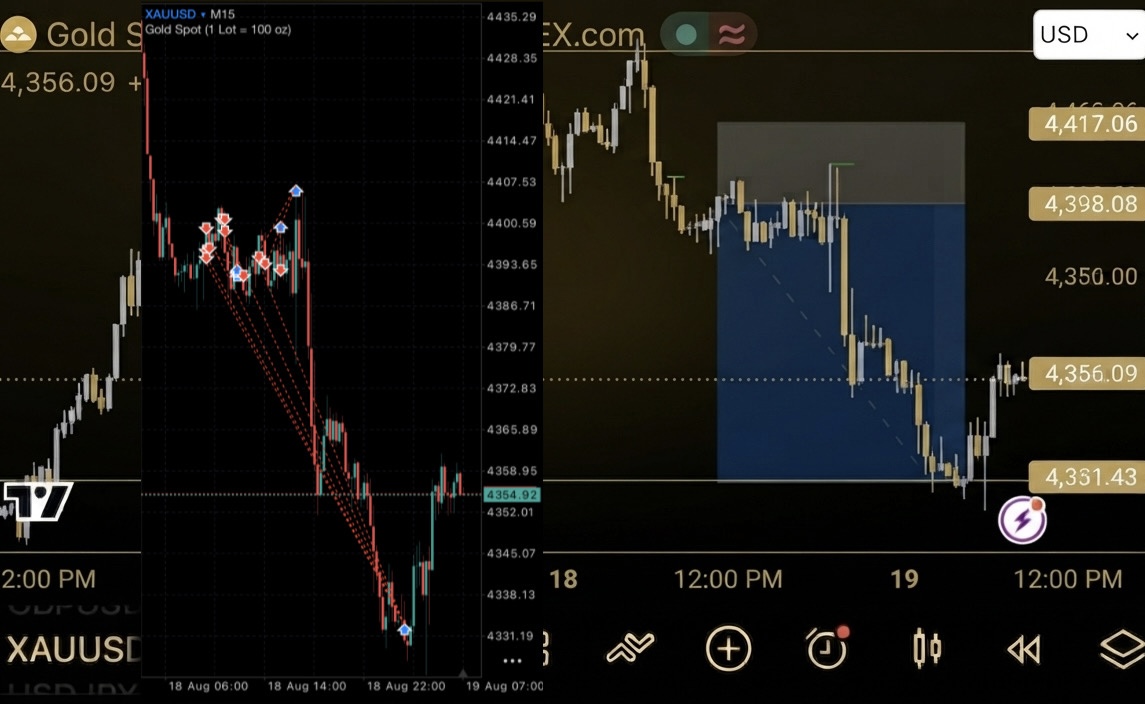
Reuters reported that spot gold climbed more than 3%, reaching approximately $4,487.91 per ounce, with an intraday high near $4,499.20.
The key takeaway for traders is simple:
Keep an eye on the U.S. Dollar, Treasury yields and Federal Reserve expectations.
These three factors are likely to remain among the most important short-term drivers of gold prices.
Disclaimer: This article is for market commentary and educational purposes only and should not be considered financial or investment advice.
Put the numbers in yourself
The pip calculator does the sizing arithmetic from this note — free, no sign-up.